
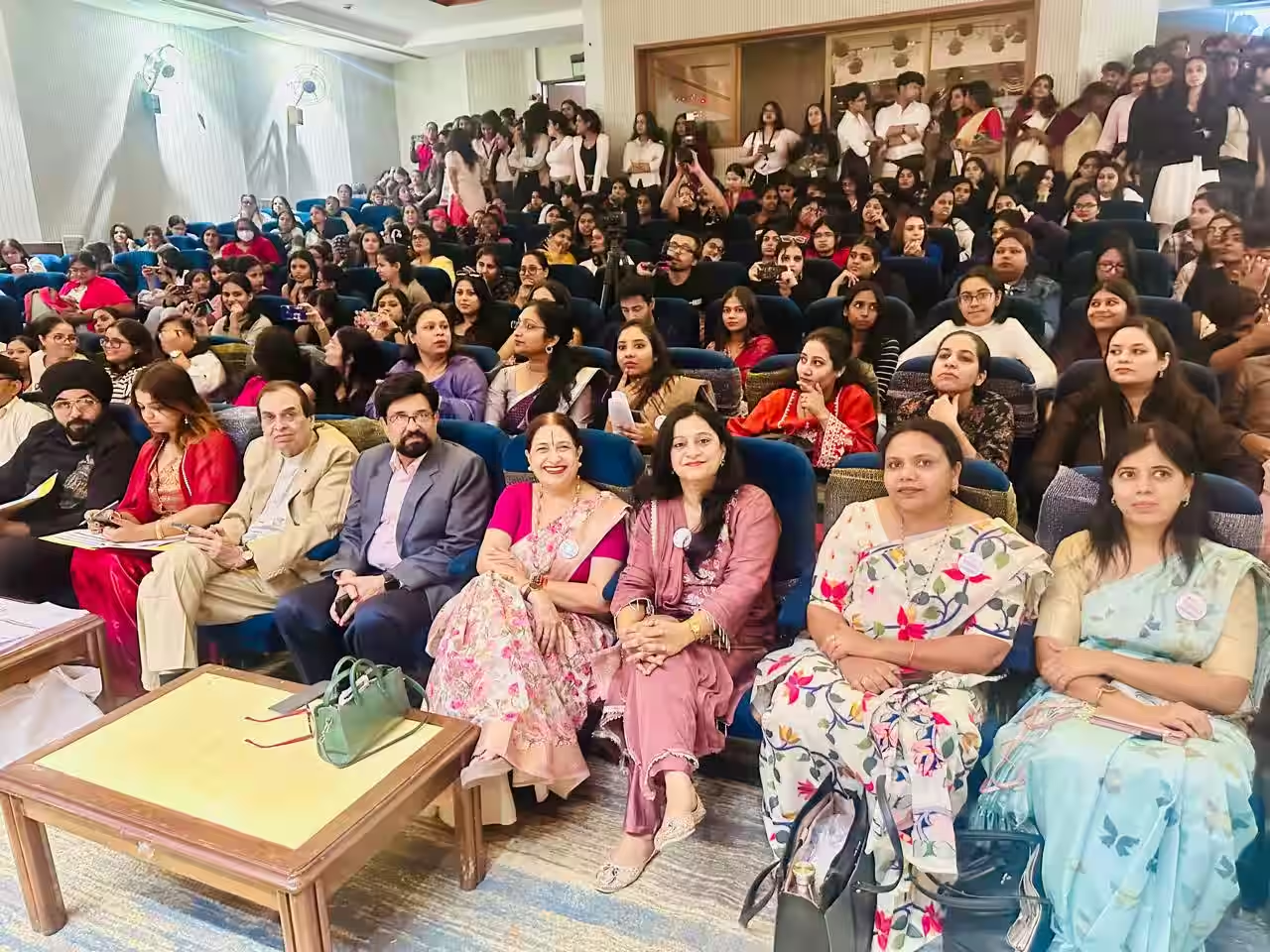
As air pollution and lifestyle-related illnesses increasingly shape India’s public-health challenges, the 32nd Perfect Health Mela 2026 opened at Jamia Hamdard with a timely message: good health must begin long before illness strikes. Under the theme “Swasth Bharat – Prevention is Power through Knowledge,” the two-day event brought doctors, educators, and students together to promote preventive healthcare, healthier lifestyles, and environmental awareness.
Organised by Jamia Hamdard and Hamdard Learning and Welfare Society, in collaboration with the Heart Care Foundation of India (HCFI), the Mela carries forward the vision of its founder, Padma Shri Dr K. K. Aggarwal, who established the initiative in 1993 to make health education accessible and encourage people to take responsibility for their wellbeing.
The inaugural ceremony at the Convention Centre was attended by Chief Guest Prof. (Dr) M. Z. Abdin, Vice-Chancellor, Jamia Hamdard; and Guests of Honour Prof. (Dr) Mohsin Wali, Senior Cardiologist and Padma Shri Awardee; Dr Sanjeev Bagai, Chairman and Managing Director, Nephron Clinic and Padma Shri Awardee; and Dr Anil Kumar, Director, Heart Care Foundation of India and former Director, Environment Department, Government of Delhi. Also present were Prof. (Dr.) Manju Chhugani, Chairperson, Perfect Health Mela 2026, and Shaukat Mufti. The ceremony began with verses from the Holy Quran, the Hamdard Tarana and the lighting of the ceremonial lamp.
Dr Veena Aggarwal, Chief Trustee, HCFI, opened her welcome address with the Sanskrit invocation: “Om Sarve Bhavantu Sukhinah, Sarve Santu Nir-Aamayaah; Sarve BhadraanniPashyantu, Maa Kashcid-Duhkha-Bhaag-Bhavet.”
The prayer expresses the wish that everyone be happy, free from illness and protected from suffering. Dr Aggarwal described this as a vision of health that goes beyond the absence of disease. She emphasised the importance of balanced nutrition, physical activity, mental wellbeing and early diagnosis, highlighting how preventive choices can make a meaningful difference to individual and community health.
Prof. (Dr) Manju Chhugani described the Mela as a tribute to the late Dr K. K. Aggarwal and a living testament to his conviction that “knowledge saves lives and prevention can transform communities.” She reinforced the importance of taking preventive healthcare to people and encouraging greater awareness of disease prevention.
Prof (Dr) Mohsin Wali praised Dr Aggarwal’s legacy of fearless, compassionate service, including during the COVID-19 pandemic. He said Jamia Hamdard was an ideal venue, bringing together the visions of Hakeem Abdul Hameed Saheb and Dr K. K. Aggarwal in the shared pursuit of a healthier society.
Bringing an Ayurvedic perspective to the discussion, Prof. Wali explained that traditional Ayurvedic understanding views health as a state of balance involving the body’s Doshas, digestive fire or Agni, body tissues or Dhatus, and waste elimination or Malas, along with a peaceful mind and senses. He offered a reminder that remains relevant across generations:
“Health is the greatest wealth, yet we often realise its true value only when we lose it.”
He also highlighted CPR as a life-saving technique, underscoring the importance of emergency-response awareness. Knowing how to recognise a cardiac emergency and respond appropriately can make a critical difference while professional medical help is being arranged.
Dr Sanjeev Bagai highlighted the growing burden of lifestyle-related diseases among Indians, including hypertension, heart disease, stroke, diabetes and obesity. He observed that an estimated 65 to 70 per cent of the disease burden is linked to lifestyle diseases and stressed the important role of preventive medicine in addressing them. He urged young people to take greater charge of their health.
Dr Anil Kumar emphasised that environmental protection and public health are inseparable. Recalling Dr. K. K. Aggarwal’s belief in the importance of a healthy environment, he said: “Without a clean environment, we cannot have good health.”
He stressed that clean air, safe water, and proper waste management are essential foundations of a healthy society. His observation brought the discussion into sharp focus for residents of Delhi and the NCR, where air quality is an everyday health concern.
Chief Guest Prof. (Dr) M. Z. Abdin, Vice-Chancellor, Jamia Hamdard, described the Perfect Health Mela as an important initiative for the future of healthcare and for raising awareness about disease prevention. He emphasised that prevention is among the strongest pillars of healthcare, that a clean environment and public health go hand in hand, and that young people must carry forward the legacies of Hakeem Abdul Hameed Saheb and Dr K. K. Aggarwal.
Naina Aggarwal Ahuja, Trustee, HCFI, proposed the vote of thanks. The ceremony concluded with the National Anthem.
Adding a wider perspective to the discussion, Prof. Farhat Basir Khan, whose professional experience spans health, strategic communication, and public-health advocacy, including multifaceted engagement with the World Health Organisation (WHO), connected Dr K. K. Aggarwal’s preventive-health vision with today’s public-health challenges.
He emphasised that medical knowledge makes its greatest contribution when people understand it, relate it to their daily lives and translate it into healthier choices. In his view, the future of healthcare requires a shift from merely responding to illness towards creating the conditions in which people can remain healthy.
He said: “The greatest healthcare innovation may not be a new medicine or machine, but a change in how we think about health. Health begins long before we enter a hospital—in the air we breathe, the food we eat, the knowledge we share and the choices we make. Communication transforms knowledge into understanding, understanding into behaviour and behaviour into a healthier society. Clean air is not a privilege but a public-health necessity; we cannot build a healthy India on an unhealthy environment. Prevention must become a people’s movement, with every citizen taking responsibility for a healthier nation.”
He further emphasised that the Perfect Health Mela’s combination of health education, innovation, debate, yoga, theatre, music and cultural activities provides an effective way to communicate important health messages, particularly to young people. The larger objective, he said, should be to make every family, educational institution and community an active participant in disease prevention.
The discussions at the Mela invite a practical question: what can people do to protect and improve their health every day? The answer lies in a combination of sensible precautions, regular physical activity, balanced nutrition and attention to early warning signs.
Consider air quality when planning outdoor activities, just as people consider the weather. Checking the Air Quality Index (AQI) can help families decide when and where to exercise. When pollution levels are poor, very poor, or severe, it makes sense to reduce outdoor exertion, avoid busy roads and construction areas, and move exercise indoors where possible. Children, older adults, pregnant women and people with asthma, COPD or heart disease should take particular care and follow their doctor’s advice.
When outdoor travel during high pollution is unavoidable, a properly fitted N95 respirator can reduce exposure to fine particles. Indoors, wet mopping rather than dry sweeping can help limit dust; minimise smoking, incense, mosquito coils, and other sources of indoor smoke. Keep windows closed when outdoor pollution is high and open them when air quality improves. Do not ignore persistent coughing, wheezing, breathlessness, or chest discomfort; severe breathing difficulty or chest pain requires urgent medical attention. No food, juice or supplement can cancel out the effects of polluted air, so reducing exposure remains the most important precaution.
Walking is one of the simplest ways to introduce physical activity into daily life. It supports cardiovascular fitness, mobility, weight management and mental wellbeing. Most adults should aim for 150–300 minutes of moderate-intensity physical activity each week, along with muscle-strengthening activity on at least two days.
Start with a manageable duration and gradually increase the time and pace. Break up long periods of sitting and take short walking breaks. During pollution episodes, move exercise indoors or wait until air quality improves. A brisk walk should leave a person breathing somewhat faster while still able to hold a conversation.
Simple, controlled breathing can help people relax and become more aware of their breathing. One technique is diaphragmatic breathing: sit comfortably, relax your shoulders, place a hand on your abdomen, breathe gently through your nose, and let your abdomen rise; then breathe out slowly without forcing it.
People with asthma, COPD or other respiratory conditions should follow techniques recommended by their healthcare professionals. Breathing exercises do not treat the effects of air pollution and should never replace prescribed medication or medical care.
A varied diet rich in fibre supports bowel regularity and digestive health. Include whole grains, millets, pulses, beans, lentils, vegetables, whole fruits, nuts and seeds in your meals. Drink adequate fluids and increase fibre gradually to avoid unnecessary bloating or discomfort.
Fermented foods such as curd may form part of a balanced diet for people who tolerate them. Persistent abdominal pain, blood in the stool, unexplained weight loss or continuing digestive problems should be discussed with a doctor rather than treated only with home remedies.
The Ayurvedic concept of Agni, discussed by Prof. Mohsin Wali, offers a traditional framework for understanding digestion and how the body processes food. It can encourage people to pay attention to digestive wellbeing, while persistent symptoms still require appropriate medical assessment.
A healthy diet should be varied and balanced. Make vegetables, fruits, pulses and whole grains regular parts of meals. Limit excess salt, free sugars, unhealthy fats and frequent consumption of highly processed foods. People with diabetes, kidney disease or other medical conditions may need individual dietary guidance.
CPR, highlighted in Prof. Mohsin Wali’s remarks, is an important life-saving skill. It is used when a person is unresponsive and not breathing normally. Recognising an emergency, calling for medical help and knowing how to perform CPR can improve the chances of survival.
Schools, colleges, workplaces and community organisations can encourage CPR training through recognised practical courses. People should learn how to respond safely and follow emergency-dispatcher instructions.
Regular health assessments can help identify risk factors such as high blood pressure, elevated blood sugar and abnormal cholesterol before serious complications develop. The appropriate screening frequency depends on age, family history, lifestyle, and existing medical conditions.
Do not ignore persistent symptoms or postpone consultation simply because they seem minor. Early medical advice can help identify problems and guide timely treatment.
The first day of the Mela brought together students through competitions and cultural presentations that used creativity to communicate health and wellbeing. Each activity centred on a health-related theme, showing that important messages can reach audiences through debate, yoga, theatre, music, dance, and visual art.
The Health Debate asked “Is Social Media Making Us Healthier or Sicker?”, while Group Yoga explored “From Chaos to Calm.” The Open Talent Showcase focused on “Health and Wellbeing,” and the Health Innovation Model competition explored “Health at Home.” The Classical Dance presentation carried the theme “Prakriti: Harmony with Nature.”
The Nukkad Natak, “Ek Din Achanak,” used theatre to engage audiences with its health message. Western Group Singing presented “It’s Okay Not to Be Okay,” drawing attention to mental well-being, while the Rock Band performed around the theme “Turn Up the Hope.” Together, the presentations showed how students can use cultural expression to encourage awareness, healthier choices and positive attitudes towards health.
The Day 1 Awards Ceremony recognised participants for their performances and achievements. Activities took place across the Convention Centre and the Archives, with students using debate, art, performance, and innovation to communicate important health messages.
The Mela continues on November 17 with an Eco-Innovation Model competition themed “Waste Less, Live Better,” Folk Dance on “Swasth Bharat, Rangon Ke Saath,” Classical Group Singing on “Swar, Saans aur Sehat,” Diya Painting on “Light for Life,” Poster Painting on “If Your Body Could Talk,” an Open Talent Showcase, Western Dance on clean air and healthy lungs, and a Fashion Show themed “The Pressure We Wear.” The event will conclude with the Day 2 Awards and Closing Ceremony.
With approximately 300 participants expected across the two days, the Perfect Health Mela seeks to carry forward Dr K. K. Aggarwal’s legacy by making health knowledge accessible, practical and actionable. Its message is clear: a healthier tomorrow depends on what individuals, families and communities do today. Prevention begins with knowledge, but its real power lies in action.
